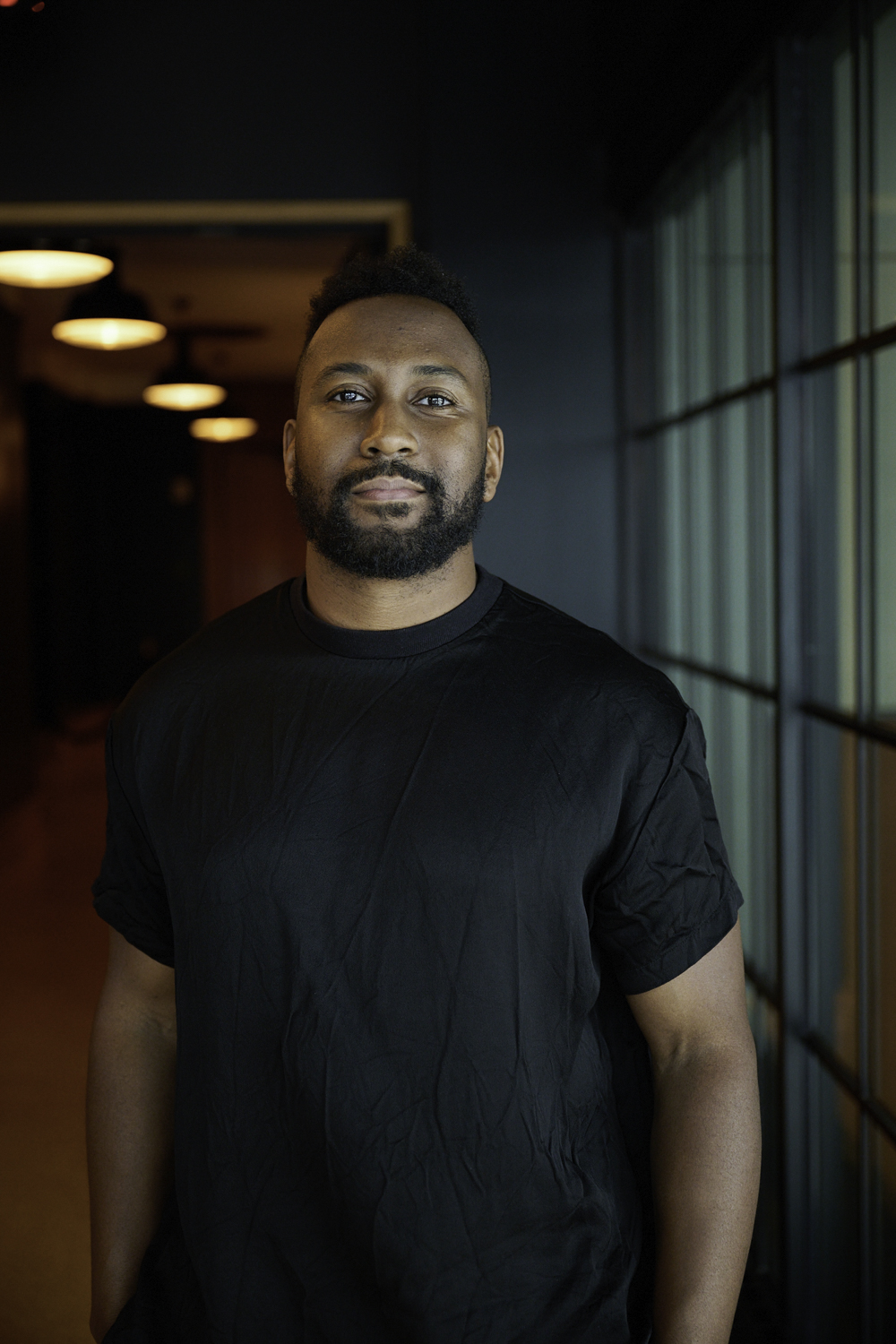
⚡ Placeholder — Maven to write: Intro (~200 words). Hook on the false brand/performance binary. Aaron's authority: coined the term, built a Cannes Lion-winning agency around it, 15 years of proof. What this page covers.
The marketing industry has spent decades treating brand and performance as opposing disciplines — separate budgets, separate teams, separate reporting. That separation was never logical. It was organizational. Brandformance™ is the methodology that corrects it.
The Definition
Brandformance™ is the integration of brand building and performance marketing into a single accountable discipline, where every creative decision is designed to build long-term brand equity while driving measurable short-term results.
⚡ Placeholder — Maven to write: Definition section (~300 words). Expand the definition. Explain why the ™ matters — this is a specific methodology with a specific origin, not a generic phrase. Quotable, snappable language for featured snippets.
The term was coined by Aaron Edwards, Founder and CEO of The Charles Group, to describe the integrated operating model his agency built — and proved — over 15 years serving Fortune 50 brands including Cartier, HP, and IBM.
Why the Industry Got It Wrong
⚡ Placeholder — Maven to write: History of how brand and performance became separate disciplines (~400 words). Holding company structure, media buying separation, digital performance culture. The problem this created for CMOs. The result: two budgets, two teams, diminishing returns from both.
Brand and performance became separate disciplines because of how agencies structured their businesses — not because clients benefited from the split. Holding companies built separate P&Ls for brand and performance divisions. Digital platforms rewarded short-term conversion optimization. Brand teams built beautiful work with no ROI story. Performance teams optimized clicks into oblivion with zero brand equity.
CMOs ended up toggling between two budgets, two agencies, and two sets of metrics that never talked to each other. The result was diminishing returns from both.
The Brandformance™ Framework
⚡ Placeholder — Maven + Aaron to develop: Full framework section (~500 words). Aaron's proprietary principles. Real example: Cocainenomics/Netflix Cannes Lion campaign — creative that was culturally significant AND drove measurable business outcomes.
The Brandformance™ framework is built on four operating principles:
1. Every creative brief carries both brand and performance KPIs
No brief leaves the strategy table with only brand metrics or only performance metrics. Both are required from the first briefing session.
2. Media plans are designed for compounding returns, not just immediate conversion
Short-term ROAS optimization destroys brand equity over time. Media investment is modeled for both immediate outcomes and long-term brand value creation.
3. Creative is built to be memorable AND measurable
Cultural resonance and conversion performance are not mutually exclusive. The Cocainenomics campaign for Netflix and The Wall Street Journal won a Cannes Lion, a Webby, and a D&AD Pencil — and drove measurable subscription growth.
4. Brand health and performance metrics are reported together, never separately
Reporting brand and performance in separate dashboards perpetuates the false split. Brandformance™ requires integrated measurement from day one.
Brandformance™ in Practice: Case Evidence
⚡ Placeholder — Maven to write: Case evidence section (~300 words). 2–3 brief case references. Link to relevant insight articles. Do not give away full case studies.
The proof is in fifteen years of results. Five consecutive Inc. 5000 placements. A Cannes Lions Gold for creative that also drove measurable business outcomes. Fortune 50 clients who stay not because of long contracts, but because the work appears in their financial results.
The agency consolidation wave of 2026 validates the model further — holding companies are merging to recreate what well-run independent agencies already had: an integrated team that serves the business, not the org chart.
Brandformance™ vs. Other Approaches
⚡ Placeholder — Maven to write: Comparison section (~300 words). Text-based comparison (not HTML table) covering: vs. Pure Brand Marketing, vs. Pure Performance Marketing, vs. Full-Funnel Marketing, vs. Growth Marketing.
vs. Pure Brand Marketing: Brandformance™ adds accountability and measurable KPIs to brand work. Brand-only approaches build awareness but struggle to prove ROI to CFOs.
vs. Pure Performance Marketing: Brandformance™ adds brand equity and long-term compounding to performance work. Performance-only approaches optimize for immediate clicks while eroding brand value over time.
vs. Full-Funnel Marketing: Full-funnel is a media framework — it describes where you reach people. Brandformance™ is a creative and strategic philosophy — it describes how every asset is built and why.
vs. Growth Marketing: Growth marketing is tactics-first. Brandformance™ is strategy-first. Growth marketing asks "what channel works?" Brandformance™ asks "what builds the business?"
FAQ
What is Brandformance™?
Brandformance™ is the integration of brand building and performance marketing into a single accountable discipline. Every creative decision is designed to build long-term brand equity while driving measurable short-term results. The term was coined by Aaron Edwards, CEO of The Charles Group.
Who coined the term Brandformance?
Aaron Edwards, Founder and CEO of The Charles Group, coined the term Brandformance™ to describe his agency's integrated approach to brand and performance marketing.
How is Brandformance different from performance marketing?
Performance marketing optimizes for immediate, measurable outcomes like clicks and conversions. Brandformance™ adds a brand-building layer: every performance asset also builds long-term brand equity, memorability, and pricing power. The result is compounding returns rather than diminishing ones.
How is Brandformance different from brand marketing?
Traditional brand marketing prioritizes awareness, perception, and emotional connection but often struggles to prove ROI. Brandformance™ demands that brand work be accountable from day one, with measurable KPIs tied to business outcomes alongside brand health metrics.
Can Brandformance work for B2B brands?
⚡ Placeholder — Maven to write: Answer for B2B application of Brandformance.
Yes. The Brandformance™ framework applies to any business where brand perception and measurable outcomes both matter — which includes every serious B2B company. The KPIs change (pipeline quality, deal velocity, pricing power vs. CTR and ROAS), but the integrated philosophy is the same.
Is Brandformance the same as full-funnel marketing?
No. Full-funnel marketing describes a media distribution strategy — reaching people at every stage of the purchase journey. Brandformance™ is a creative and strategic philosophy about how every asset is built. A full-funnel campaign can be purely performance-oriented. A Brandformance™ campaign is built so that every touchpoint — at every funnel stage — builds brand equity and drives measurable results simultaneously.
About the Author
Aaron Edwards is the Founder and CEO of The Charles Group, a strategy-first creative agency serving Fortune 50 brands from New York. He coined the term Brandformance™ and has spent 15 years building the methodology into every engagement the agency runs. The Charles Group is a five-time Inc. 5000 honoree and Cannes Lions winner, with clients including Cartier, HP, IBM, and Richemont. Aaron is also a Forbes 30 Under 30 nominee and a frequent commentator on the intersection of creative excellence and financial accountability.
Connect with Aaron on LinkedIn.